Common Mistakes When Buying Mild Steel Sections



Blog Article
Buying mild-steel sections may appear straightforward, but a small error in the order can create extra cutting, poor fit-up, stock confusion, project delays or avoidable transport costs. The risk increases when the buyer gives only a product name and leaves the supplier to assume the size, length, quantity or application.
A reliable purchase begins with a clear requirement. The buyer should identify the section, dimensions, length, quantity, intended use, applicable grade or standard, documentation needs and delivery conditions before confirming the order. This guide explains the mistakes that dealers, fabricators, contractors and industrial buyers should avoid when purchasing MS flats, angles, squares and rounds.
Buying Without Defining the Application
The same type of mild-steel section can be used in many different products. An MS flat may become part of a gate, railing, frame, bracket or general engineering component. An angle may be used in a light frame, support, shed or fabricated assembly. The required size and quality conditions depend on what the section must do.
Buyers should tell the supplier how the material will be used, especially when the job has an approved drawing, load requirement, close fit, machining operation or project specification. The supplier cannot confirm suitability from a product name alone. Final material selection for a structural or safety-critical application should follow the approved design and the responsible engineer's requirements.
Giving an Incomplete Product Description
Terms such as flat, angle, square and round describe a profile, not a complete order. A usable purchase requirement should state the relevant dimensions, required length, quantity and any grade or standard that applies.
For MS flats, buyers normally need to specify width and thickness. For MS angles, the leg dimensions and thickness are important. Squares and rounds require the appropriate cross-sectional size. If the project needs a specific length, tolerance, edge condition or test document, include it before the quotation is finalized.
Choosing Only by the Lowest Price
The lowest quoted rate does not always produce the lowest finished cost. Variation in dimensions, unclear quantity terms, mixed bundles, unsuitable lengths or missing documentation can add cutting time, rework, sorting and material loss.
Compare quotations on the same basis. Check whether the price covers the same product size, length, grade or standard, quantity basis, taxes, transport, unloading responsibility and documentation. A price comparison is meaningful only when every supplier is quoting against the same requirement.
Assuming All Mild Steel Sections Are Interchangeable
Mild steel is a broad description. Products that look similar may differ in dimensions, tolerances, material requirements, length or intended use. Replacing one section with another without reviewing the drawing can affect fit-up, weight, appearance and performance.
Do not approve a substitute through an informal phone message alone. Record the proposed change and obtain the required technical approval before ordering or using the material. The revised product description should appear on the purchase order and delivery documents.
Skipping Dimensional Checks
A section can look correct from a distance and still create trouble during fabrication. Width, thickness, leg size, diameter, straightness and length can affect cutting, alignment and assembly. Repeated variation may force the fabricator to adjust jigs, gaps or component spacing.
Define which dimensions matter to the job and how they will be checked. For a repeat order, confirm that the new material matches the current drawing and not an old verbal description. When close control is necessary, state the applicable tolerance rather than using vague terms such as exact size.
Ordering the Wrong Length Mix
A buyer may order the correct total quantity but choose lengths that do not match the cutting plan. This can increase offcuts, handling and weld joints. Standard commercial lengths may work well for one fabrication schedule and poorly for another.
Prepare a cutting list or nesting plan before placing a large order. Compare the required component lengths with the available supply lengths. Ask whether the order will contain one length or a mix, and record the agreed arrangement. The best choice balances material use, fabrication time, transport and stock handling.
Confusing Pieces Length and Weight
Steel may be discussed by pieces, total length, bundle, theoretical weight or actual weight. Confusion between these units can produce shortages, excess stock or disputes at delivery.
The purchase order should state the unit of measure and how the final quantity will be verified. If the quotation uses weight, confirm the basis used for calculation or billing. If the order uses pieces, record the section size and length of each piece. Do not assume that a bundle always contains a fixed number of sections.
Not Confirming the Grade Standard and Documents
Some general fabrication jobs may use a supplier's regular product specification, while other projects require a named grade, product standard, inspection record or test certificate. These requirements should be agreed before production or dispatch, not requested after the material reaches the site.
Ask which specification applies to the quoted product and which documents are available for the order. The project drawing, purchase specification and engineer's approval take priority for critical applications. A website description or sales discussion should not replace an approved technical requirement.
Judging Quality Only by Surface Appearance
Surface condition is important, but appearance alone does not confirm dimensions, composition or mechanical properties. A clean-looking section may still be the wrong size, while minor surface oxidation may require assessment and preparation rather than automatic rejection.
Inspect the material against the agreed purchase requirements. Check identification, dimensions, straightness, visible damage, excessive corrosion, bundle condition and documentation. If surface condition could affect coating, welding, machining or the finished appearance, agree the acceptance requirement before purchase.
Ignoring Fabrication Requirements
The buying decision should consider how the material will be cut, drilled, welded, bent, machined, painted or galvanized. A section that is technically available may not be the most practical choice for the workshop's equipment or the approved design.
Review fabrication needs with the production team before ordering. Confirm whether the planned section can be handled by the available saws, presses, drills, fixtures and lifting equipment. Any welding procedure, forming limit or coating requirement should follow the applicable technical specification.
Waiting Until the Last Moment to Check Availability
Even a commonly used section may not be available in the required size, length and quantity at the exact time a project needs it. A late order can force the buyer to accept a different length mix, split the delivery or delay fabrication.
Share the requirement early and confirm availability, production lead time and dispatch schedule. For phased work, align deliveries with the fabrication plan and storage capacity. Record which items are ready, which require production and whether the supplier expects a partial dispatch.
Overlooking Transport Unloading and Storage
Long and heavy sections require suitable vehicles, secure loading, a prepared unloading area and safe lifting equipment. The buyer should not assume that transport or unloading is automatically included in the material price.
Confirm who arranges the vehicle, who unloads the material and what equipment will be available at the receiving site. Prepare stable supports and a dry, organized storage area before delivery. Poor handling or storage can damage bundle identification, allow sections to mix or expose material to unnecessary moisture and contamination.
Choosing a Supplier Without Checking Capability
A buyer should evaluate more than a product list. Ask how the supplier checks dimensions, identifies batches, handles material, verifies dispatch weight and responds when a delivery issue occurs. The answers should match the needs of the order.
For regular purchases, review delivery consistency and documentation over time. A dependable supplier should be able to explain the product being offered and confirm the agreed commercial and technical terms clearly.
Failing to Inspect the Delivery
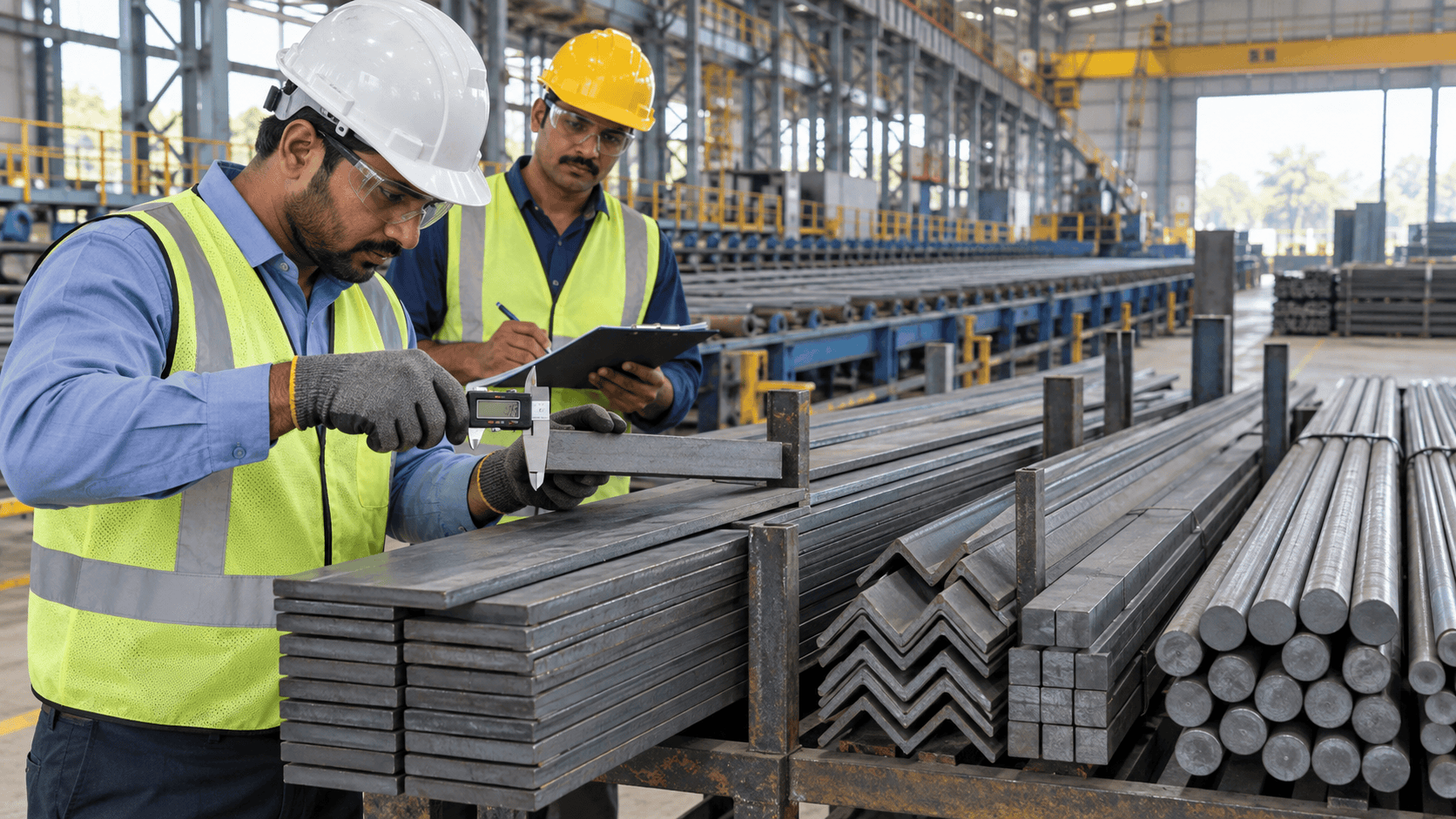
Inspection should happen before material is mixed with existing stock or sent to fabrication. Check the product type, section size, length, piece or bundle count, visible condition and identification against the purchase order and delivery documents.
Record shortages, damage or unclear identification promptly. Keep photographs and note the affected bundle or batch where possible. Early documentation gives the buyer and supplier a clearer basis for resolving the issue.
Mild Steel Buying Checklist
How HEBE Supports Informed Steel Buying
HEBE Steels manufactures MS flats, angles, squares and rounds for fabrication, construction and general engineering applications. Its documented facility includes a rolling mill, an in-house chemical and physical testing laboratory, batch-wise inspection and stacking, mechanized material-handling equipment and two computerized 100 MT weighbridges.
These facilities support product checking, organized handling and dispatch preparation. Buyers should still communicate the complete order requirement and confirm the applicable specification, dimensions, documentation and delivery arrangement before purchase.
Read more about HEBE's quality approach and manufacturing facilities.
Conclusion
Most buying problems begin with an incomplete requirement or an unclear comparison. A written specification, consistent quotation basis, dimensional check, agreed quantity method and planned delivery give both buyer and supplier a clearer order to execute.
For MS flats, angles, squares or rounds, contact HEBE Steels to confirm product availability, order specifications, quality documentation and dispatch support.
©2025-26, Hebe Steels Private Limited. All Rights Reserved.