Applications of MS Squares and Rounds in Fabrication
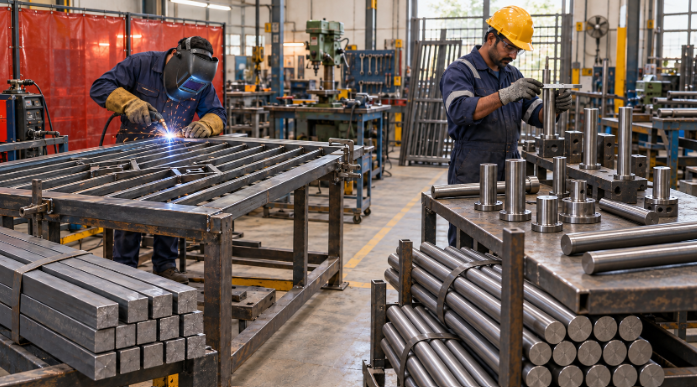


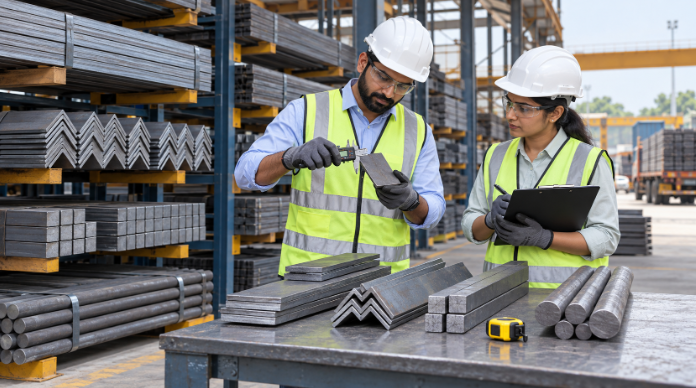
MS squares and MS rounds are solid mild-steel sections used across fabrication, construction support work and general engineering. Their simple profiles make them practical for cutting, welding, drilling, bending and machining when the selected size, grade and process suit the approved design.
The two products serve different purposes. A square bar provides flat faces and defined corners that help with alignment and welded layouts. A round bar provides a continuous circular surface that suits pins, handles, linkages, turned parts and curved fabricated details. Understanding these differences helps fabricators choose a section that fits the component and the workshop process.
What Are MS Squares and MS Rounds
An MS square is a solid bar with a square cross-section. It should not be confused with a hollow square tube or box section. An MS round is a solid bar with a circular cross-section and is different from a hollow pipe or tube.
Both products are supplied in different sizes and commercial lengths. The exact dimensions, grade, tolerances and documentation should be confirmed with the supplier against the purchase requirement. For structural or safety-critical work, section selection must follow the approved drawing and the responsible engineer's specification.
Why Fabricators Use Solid Square Bars
Square bars provide four flat faces that are convenient for marking, clamping and positioning. When used in a grid or frame, the straight edges help the fabricator maintain regular spacing and a defined visual pattern.
The solid section also provides material for drilling, shaping, grinding or local machining where the design requires it. Its weight and stiffness differ from hollow box sections, so the two products should not be substituted without technical approval.
Applications of MS Squares
Gates and Security Grills
MS squares are widely used as vertical or horizontal members in fabricated gates, window grills, boundary panels and security screens. Their flat faces make it easier to align repeated members against a frame or jig.
Fabricators can use straight square bars for clean geometric patterns or form selected bars into decorative shapes when the size and material permit. Spacing, section size, weld details and anchorage should follow the approved design and security requirement.
Railings and Balcony Details
Square bars can form balusters, infill members and decorative elements in railings and balcony panels. Their defined edges create a strong visual line and make evenly spaced layouts easier to set out.
Handrails, guards and balcony barriers are safety-related components. The fabricator should not choose the bar size from appearance alone. Overall height, openings, loading, connections and corrosion protection must comply with the project design and applicable requirements.
Frames Supports and Brackets
Solid square bars can be used in compact frames, supports, brackets, stops and welded fixtures. The flat faces provide stable contact against plates, flats or other square members during assembly.
These applications are common where the section is part of a fabricated detail rather than a large primary structure. The designer should confirm whether a solid square, flat, angle or hollow section gives the required strength, weight and connection arrangement.
Racks Stands and Display Fixtures
Fabricators use square bars in small racks, stands, partitions, display frames and workshop fixtures. The profile works well for repeated grids and simple welded layouts.
Load capacity, stability and safe anchoring still need to be considered. A decorative stand and a load-bearing storage rack do not have the same design requirement, even when both use square bars.
Decorative Metalwork
Square bars can be cut, bent or twisted to create patterns for gates, grills, furniture details and architectural metalwork. The finished appearance depends on controlled heating or forming, consistent spacing and careful surface preparation.
Forming can change the bar's shape and local properties. The fabrication method should be tested and approved for the chosen size and application, particularly when repeated bends or tight radii are involved.
Jigs Fixtures and General Workshop Parts
Square bars are useful for stops, guides, spacers, handles, fixture elements and repair parts. The flat faces help with clamping and orientation, while the solid cross-section allows local drilling or machining where required.
The material grade, dimensions and machining allowance should match the drawing. A workshop should not assume that every mild-steel bar has the same properties or tolerance.
Why Fabricators Use Solid Round Bars
Round bars have no corners and can rotate or fit within circular holes, collars and sleeves. This makes them suitable for components that are turned, drilled, threaded, bent or used as pivots and handles.
Diameter consistency matters when a component must fit another part. Surface finish, straightness, machining allowance and material properties may also be important for engineering work. These requirements should be stated before purchase.
Applications of MS Rounds
Grills Railings and Decorative Bars
MS rounds are used as straight or shaped members in grills, railings, gates and decorative panels. The circular profile provides a softer visual form than a square bar and can suit curved or repeated patterns.
For guards, railings and security work, the section size, spacing and connections must follow the approved design. A round bar should not be confused with pipe, which has a different cross-section, weight and fabrication behaviour.
Handles Levers and Linkages
Round bars can be cut and formed into handles, operating rods, levers and simple linkages for fabricated equipment. The circular surface is comfortable to grip and works naturally with holes, bushes or guides.
The designer should confirm the required diameter, bend radius, connection detail and load. Components that move, carry force or form part of a machine may need controlled material properties, machining and inspection.
Pins Spacers and Bush Components
Fabricators and machine shops use round-bar stock to produce pins, spacers, collars and related turned components. The bar may be cut to length and then drilled, faced, threaded or machined to the final dimension.
Not every round bar is suitable for every pin or shaft. The required grade, strength, hardness, tolerance and surface finish depend on the component's duty. Critical moving or load-bearing parts require an approved engineering specification.
Shafts and Rotating Components
Round stock can serve as raw material for shafts, rollers and rotating components after suitable machining. Its circular geometry provides the starting form for turning operations.
A general MS round should not automatically be treated as a finished shaft. Straightness, concentricity, mechanical properties, bearing fits, fatigue loading and heat treatment may require a different or more tightly controlled material specification.
Clamps Hooks and U Shaped Parts
Round bars can be bent into clamps, hooks, U-shaped parts and fastening components where the approved design permits. The smooth profile makes it suitable for formed components without sharp external corners.
Bending method, radius and springback vary with diameter and material condition. Fabricators should use suitable tooling and avoid uncontrolled heating or bending that could damage the part or create inconsistent geometry.
General Engineering and Repair Work
MS rounds are frequently used for fabricated supports, guides, pegs, stops, spacers and replacement parts. They are convenient when a workshop needs a solid cylindrical starting material for cutting, welding or machining.
For repair work, match the new part to the approved dimensions and material requirement. Copying only the visible diameter may overlook the grade, fit, loading or surface condition needed for safe service.
Choosing Between MS Squares and MS Rounds
The correct profile depends on the component rather than personal preference. A square bar is often easier to align in grids, frames and welded fixtures. A round bar is generally more suitable for circular fits, turning, rotation, handles and curved parts.
Fabrication Considerations
Cutting and Preparation
Use a cutting method suited to the bar size, required accuracy and production volume. Mark parts from the approved cutting list and control end squareness when the piece will fit against a plate or another section. Remove burrs and sharp edges before handling or assembly.
Welding and Fit Up
Clean the joint area and use clamps or jigs to maintain alignment. Square bars may provide convenient flat contact surfaces, while round bars may need saddles, notches or fixtures to prevent rolling during fit-up. Welding procedure, consumables and preheat requirements should follow the applicable material and joint specification.
Drilling Machining and Forming
Allow enough material for the final machined dimension and confirm the required tolerance. Support bars securely during drilling and turning. For bends or decorative forming, use repeatable tooling so the finished components have consistent shape and spacing.
Surface Protection
Remove oil, loose scale, rust and fabrication residue as required by the coating system. The choice of primer, paint, galvanizing or another protective treatment depends on the service environment and project specification. Pay attention to welds, corners, contact areas and locations where water may collect.
What Buyers Should Specify
How HEBE Supports Fabrication Requirements
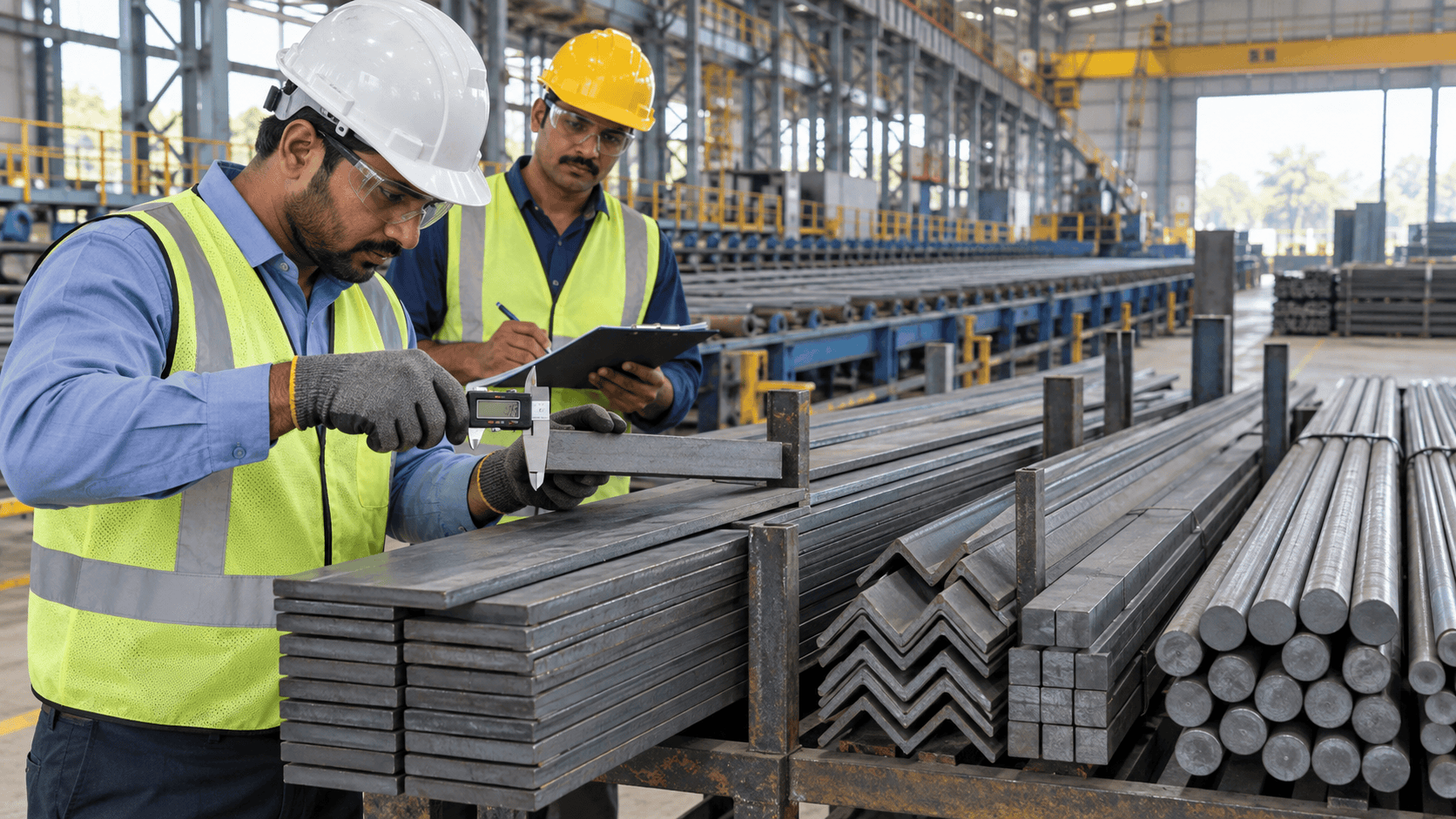
HEBE Steels manufactures MS squares and rounds along with MS flats and angles for fabrication, construction and general engineering applications. Its documented facility includes a rolling mill, an in-house chemical and physical testing laboratory, batch-wise inspection and stacking, mechanized material-handling equipment and two computerized 100 MT weighbridges.
HEBE positions dimensional accuracy and uniformity as important parts of its quality approach. Buyers should provide the complete product size, length, quantity, applicable specification and documentation requirement so the order can be reviewed correctly.
Learn more about HEBE's quality approach and manufacturing facilities.
Conclusion
MS squares are practical for grids, gates, grills, fixtures and components that benefit from flat faces and defined alignment. MS rounds suit circular fits, handles, pins, formed parts and machined components. The right choice depends on the drawing, load, connection, fabrication process and service environment.
For MS squares, rounds, flats or angles, contact HEBE Steels to confirm product availability, order specifications, quality documentation and dispatch support.
©2025-26, Hebe Steels Private Limited. All Rights Reserved.